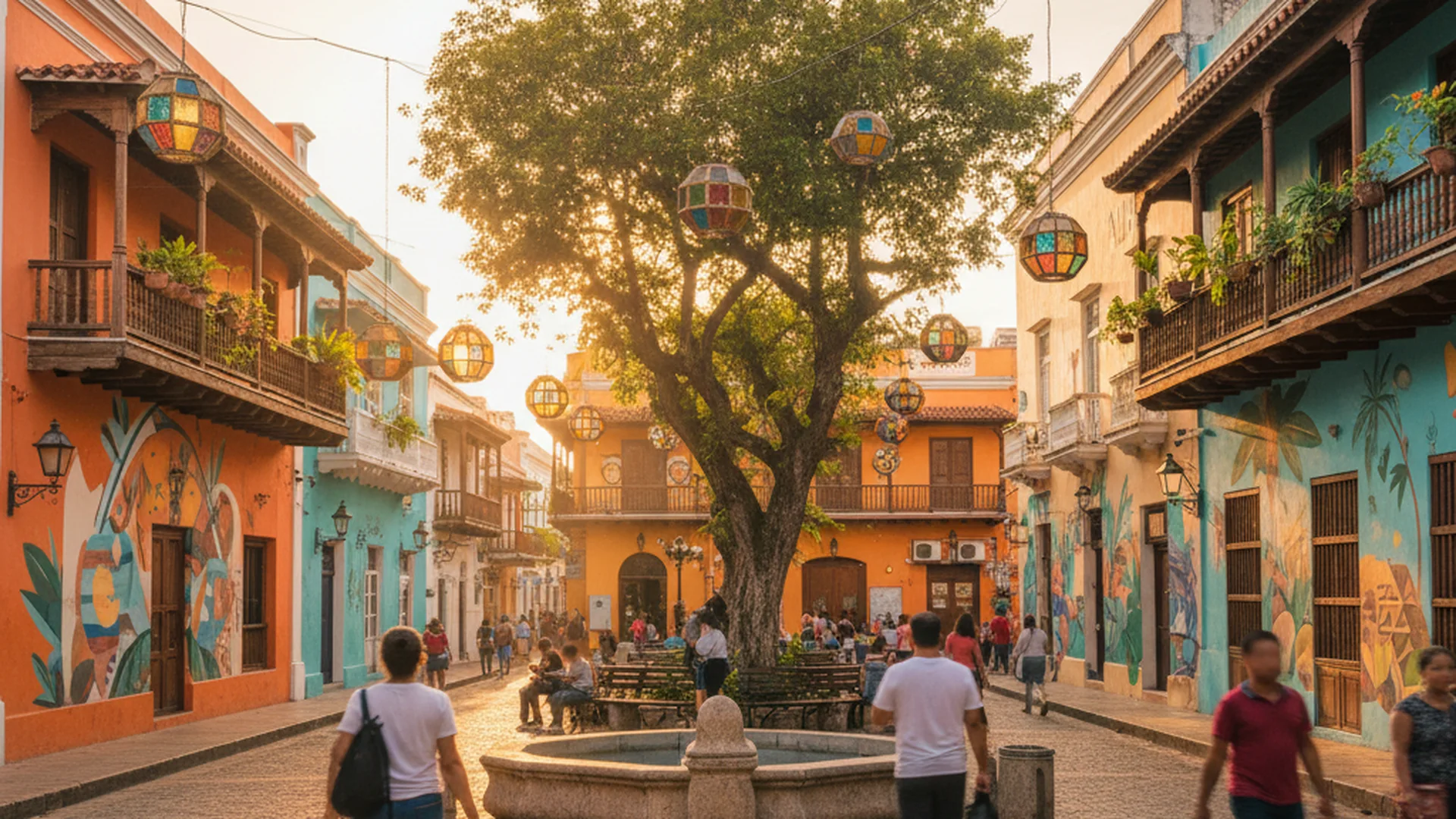
Street art, rooftop bars, a working-class neighborhood gentrifying fast.Arte callejero, bares en azoteas, un barrio popular que se está gentrificando rápido.
Cartagena Guide
Last updated April 2026
Specific question while you read? Ask Catalina, the Cartagena Guide concierge.¿Pregunta específica mientras lees? Pregúntale a Catalina, la concierge de Cartagena Guide.Chat with Catalina ›Habla con Catalina ›
What it is
Getsemaní sits just outside the walls of El Centro, across the Puente Román. Historically it was the working-class neighborhood where the city's enslaved and free-Black communities lived; in recent decades it's become Cartagena's creative and nightlife hub. Street art, rooftop bars, hostels, boutique hotels, bohemian cafés - and still, despite the transformation, long-standing local residents, corner tiendas, and kids playing on the cobblestones.
The vibe
Louder and grittier than El Centro. Murals cover entire building facades (many painted during the 2013-2015 wave of art festivals). Plaza de la Trinidad in front of the Iglesia de la Santísima Trinidad fills up most evenings - locals, travelers, buskers, beer from plastic cups, sometimes an impromptu salsa or champeta session. If watching makes you want to actually learn a few steps, you can book a group salsa class on Viator. It's one of the most photographed plazas in Colombia for good reason.
Photo via Viator
Who stays here
Younger travelers, backpackers, digital nomads, and anyone who wants a more textured experience than El Centro offers. Also long-time locals who grew up here - that mix is part of why the neighborhood still has a pulse. Some expats rent apartments or Airbnbs here, though the longer-term rental market has tightened significantly as tourism demand has risen.
What's here
Calle del Arsenal runs the length of the neighborhood and is the main bar and club strip (Café Havana for live salsa is an institution). Calle de la Sierpe and Calle de la Media Luna are rooftop-bar and boutique-hotel density. Plaza de la Trinidad is the social heart. Hostel row sits around Calle Espíritu Santo.
Eating: Getsemaní's restaurant scene has exploded since 2018 - expect everything from street-food-style arepas to tasting menus. Prices sit meaningfully below El Centro for comparable quality.
The honest trade-offs
Gentrification is real. Rents have pushed many long-time residents out. If “authentic” is your filter, know that the Getsemaní of 2015 and the Getsemaní of today are different places. What's still here is the street art, the plaza culture, and the architecture; what's gone is a lot of the residential texture.
Noise carries. Getsemaní is a nightlife neighborhood. If you're a light sleeper, ask about the room's proximity to Calle del Arsenal or Plaza de la Trinidad before you book.
Safety: Generally fine in the tourist-trafficked blocks, including late at night on Calle del Arsenal. Side streets in the outer edges thin out after midnight - take a taxi if you're not sure.
Best for
Younger travelers and nightlife-first trips.
Solo travelers and digital nomads on 1-4 week stays.
Anyone who wants walking access to El Centro but doesn't want to sleep inside it.
Spotted something?
This neighborhood profile is a living document. If a price has changed, a venue has closed, the map boundary is wrong, or something here doesn't match your on-the-ground experience, let us know. Corrections land publicly in the page's git history.
Specific question while you read? Ask Catalina, the Cartagena Guide concierge.¿Pregunta específica mientras lees? Pregúntale a Catalina, la concierge de Cartagena Guide.Chat with Catalina ›Habla con Catalina ›
Qué es
Getsemaní queda justo afuera de las murallas de El Centro, al otro lado del Puente Román. Históricamente fue el barrio de la clase trabajadora donde vivían las comunidades negras esclavizadas y libres de la ciudad; en las últimas décadas se convirtió en el epicentro creativo y de vida nocturna de Cartagena. Arte callejero, bares en azotea, hostales, hoteles boutique, cafés bohemios, y aún así, a pesar de la transformación, residentes de largo tiempo, tiendas en las esquinas y niños jugando en los adoquines.
La vibra
Más ruidoso y tosco que El Centro. Murales cubren fachadas enteras de edificios (muchos pintados durante la ola de festivales de arte 2013-2015). La Plaza de la Trinidad frente a la Iglesia de la Santísima Trinidad se llena la mayoría de noches: locales, viajeros, músicos callejeros, cerveza en vasos de plástico, a veces una sesión improvisada de salsa o champeta. Si ver te dan ganas de aprender unos pasos, puedes reservar una clase grupal de salsa en Viator. Es una de las plazas más fotografiadas de Colombia por una buena razón.
Foto vía Viator
Quién se hospeda aquí
Viajeros jóvenes, mochileros, nómadas digitales y cualquiera que quiera una experiencia más texturizada que la que ofrece El Centro. También residentes de largo tiempo que crecieron acá: esa mezcla es parte de por qué el barrio todavía tiene pulso. Algunos extranjeros alquilan apartamentos o Airbnbs por aquí, aunque el mercado de alquiler de largo plazo se ha apretado significativamente con la subida de la demanda turística.
Qué hay aquí
Calle del Arsenal recorre todo el barrio y es la franja principal de bares y discotecas (Café Havana para salsa en vivo es una institución). Calle de la Sierpe y Calle de la Media Luna tienen densidad de bares en azotea y hoteles boutique. La Plaza de la Trinidad es el corazón social. La fila de hostales queda alrededor de Calle Espíritu Santo.
Comer: La escena gastronómica de Getsemaní explotó desde 2018: espera de todo, desde arepas estilo comida callejera hasta menús degustación. Los precios están significativamente por debajo de El Centro por calidad comparable.
Los compromisos honestos
La gentrificación es real. Los alquileres han sacado a muchos residentes de largo tiempo. Si "auténtico" es tu filtro, sabe que el Getsemaní de 2015 y el Getsemaní de hoy son lugares diferentes. Lo que sigue aquí es el arte callejero, la cultura de plaza y la arquitectura; lo que se fue es mucha de la textura residencial.
El ruido se propaga. Getsemaní es un barrio de vida nocturna. Si eres un dormilón ligero, pregunta sobre la proximidad de tu cuarto a Calle del Arsenal o Plaza de la Trinidad antes de reservar.
Seguridad: Generalmente bien en los bloques con tráfico turístico, incluso tarde en la noche en Calle del Arsenal. Las calles laterales en los bordes exteriores se vacían después de la medianoche: toma un taxi si no estás seguro.
Lo mejor para
Viajeros jóvenes y viajes orientados a la vida nocturna.
Viajeros en solitario y nómadas digitales en estancias de 1-4 semanas.
Cualquiera que quiera acceso a pie a El Centro pero no quiera dormir dentro de él.
¿Notaste algo?
Este perfil de barrio es un documento vivo. Si un precio cambió, un lugar cerró, el límite del mapa es incorrecto, o algo acá no coincide con tu experiencia en terreno, cuéntanos. Las correcciones aparecen públicamente en el historial git de la página.
Newsletter
Get the guide in your inbox
One short email each Saturday. New posts, what's on this week, and anything worth knowing about Cartagena. No spam, unsubscribe anytime.