Where to Stay in Cartagena: The Neighborhoods, ComparedDónde hospedarse en Cartagena: Los barrios, comparados
Cartagena is really five or six different cities depending on which neighborhood you sleep in. Here is the honest breakdown of each, who it suits, and what a night actually costs.
Mike Chartrand
June 2026 · 13 min read
Specific question while you read? Ask Catalina, the Cartagena Guide concierge.¿Pregunta específica mientras lees? Pregúntale a Catalina, la concierge de Cartagena Guide.Chat with Catalina ›Habla con Catalina ›
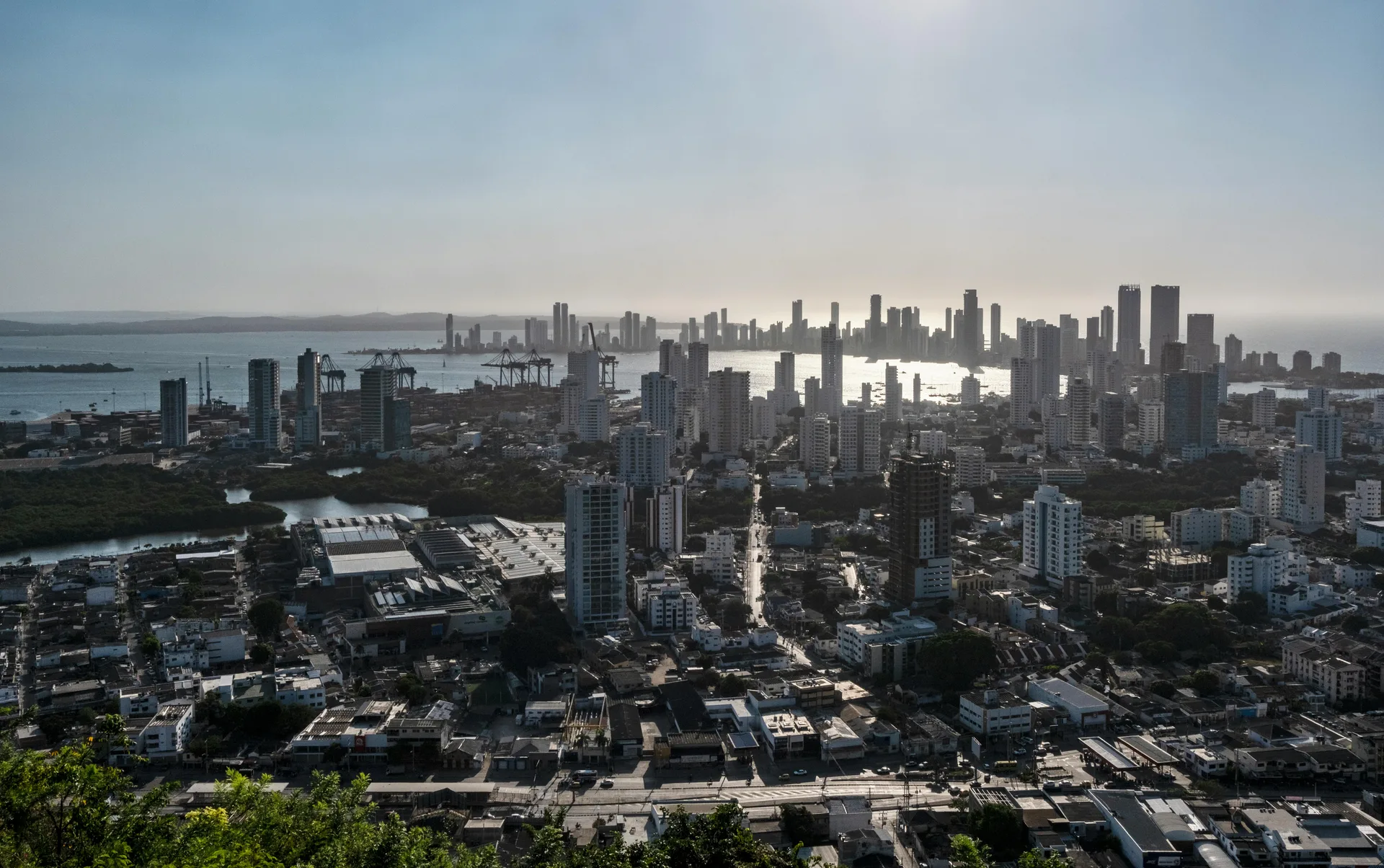
Where you sleep shapes your whole Cartagena trip more than which hotel you pick. The city splits into distinct neighborhoods that feel like different places: the romantic colonial Walled City, the artsy and walkable Getsemani next door, the high-rise beach strip of Bocagrande, the calmer residential peninsula of Castillogrande, the local and good-value Manga, and the resort islands of Baru and the Rosarios. This guide compares them honestly so you can match the area to how you actually travel.
Short version: the Walled City for atmosphere and walkability, Getsemani for a younger budget, Bocagrande for a beach-and-conveniences holiday, Castillogrande for quiet, Manga for value and a local feel, and the islands for an escape rather than a base.
Quick orientation before you book
The Walled City (Centro Historico) is small. You can walk across it in 15 minutes. Staying inside the walls means you step out into the best of Cartagena, and you pay for it.
Cartagena is hot and humid year round. Air conditioning is not optional for most North American visitors. Confirm it works, in the room you are actually booking, not just "the property has AC."
The beaches in the city are not the postcard. Bocagrande sand is grey-brown and the water is murky. The turquoise water is out at the Rosario Islands and Baru, an hour by boat. Do not pick Bocagrande expecting Caribbean-blue water at your feet.
Taxis and apps are cheap. You do not have to stay in one area to enjoy another. A ride from Bocagrande to the Walled City is short and inexpensive, so "convenience" matters less than the vibe you want to wake up in.
The Walled City (Centro Historico and San Diego)
The atmospheric pick. This is the Cartagena from the postcards: balconies dripping with bougainvillea, plazas, churches, horse carriages, and the city wall itself. Inside the walls splits loosely into the busier Centro and the quieter, more residential San Diego in the north. Hotels here range from world-famous luxury (converted convents and mansions) down to small boutique guesthouses, but even the modest ones command a premium for the location.
Best for: first-time visitors, couples, anyone who wants to walk out of the door into the best of the city, and travelers who value atmosphere over a pool and a beach.
Trade-offs: it is the most expensive area, some streets get busy and noisy with nightlife and the occasional street vendor, and it has no real beach. Light sleepers should ask for an interior or courtyard-facing room.
What it costs: boutique rooms commonly run from around COP 500,000 to COP 1,200,000 a night (roughly USD 125 to 300), with the flagship luxury hotels well above that. See our roundup of the best Walled City and Getsemani hotels.
Getsemani
The walkable budget pick. Just outside the wall, a five minute walk from the Centro, Getsemani went from working-class barrio to the city's most characterful neighborhood: street art, Plaza de la Trinidad filling up every evening, hostels next to boutique hotels, and the best concentration of casual restaurants and bars. It has become more polished and more expensive than it was, but it is still better value than inside the walls.
Best for: younger travelers, solo visitors, anyone on a mid-range budget who still wants to walk everywhere, and people who want nightlife and street life on the doorstep.
Trade-offs: it is lively, which means noise, especially around Plaza de la Trinidad and Calle del Arsenal. A few blocks toward the edges still feel rough at night. Pick your street carefully.
What it costs: guesthouses and boutique rooms commonly run COP 300,000 to COP 700,000 a night (about USD 75 to 175).
Bocagrande and El Laguito
The beach-and-conveniences pick. Bocagrande is the high-rise peninsula south of the old town: a wall of beachfront hotels and apartment towers, supermarkets, pharmacies, malls, and chain restaurants. It feels like a Latin American Miami Beach. The big international hotel brands are here, and El Laguito at the tip has the calmest water.
Best for: families who want a pool and the beach downstairs, travelers who want familiar conveniences and big-brand hotels, longer stays, and anyone who prioritizes amenities over colonial charm.
Trade-offs: the beach is grey and the water murky, beach vendors can be persistent, and you are a short taxi ride (not a walk) from the historic center. The towers can feel impersonal.
What it costs: a wide range, from COP 350,000 mid-range up past COP 1,500,000 for beachfront five-star (about USD 88 to 375+). See our best Bocagrande and Castillogrande hotels.
Castillogrande
The quiet upscale pick. The residential peninsula just past Bocagrande, lined with apartment buildings, a few hotels, and a calmer bayside (rather than open-sea) waterfront. It is where well-off cartageneros live, so it feels safe, orderly, and quiet.
Best for: repeat visitors, longer stays, retirees and anyone who wants calm, families who want space, and travelers who do not need to be in the middle of the action.
Trade-offs: fewer restaurants and almost no nightlife within walking distance, so you will use taxis. The waterfront is bay-side, not a swimming beach.
Manga
The local value pick. An island neighborhood between the old town and the mainland, full of early-twentieth-century mansions, leafy streets, the marina, and a genuinely local feel. It is close to the Walled City (a short ride or a long walk over the bridge) without the tourist pricing.
Best for: budget-conscious travelers, longer stays, digital nomads, and anyone who wants to feel like they live in Cartagena rather than visit it.
Trade-offs: fewer polished tourist services, more Spanish needed, and it is residential rather than scenic.
Baru and the Rosario Islands
The escape, not a base. If you want the turquoise Caribbean water, it is out here, an hour by boat or road from the city. These are resort and beach-club stays, wonderful for a night or two of pure beach but isolating as a base for seeing Cartagena itself.
Best for: a beach add-on at the start or end of a trip, honeymooners, and anyone whose priority is the water rather than the city.
We compare three of the most-booked island stays in our guide to the Rosario Islands hotels.
Which area for which traveler
First-timer, 3 to 5 nights: stay in the Walled City or Getsemani. You came for the historic center, so wake up in it.
Couple after romance: Walled City, ideally quieter San Diego.
Family with kids: Bocagrande or El Laguito, for the pool and the beach downstairs.
Retired couple who wants calm: Castillogrande, or a quiet San Diego street.
Long stay or working remotely: Manga or Castillogrande for value and space.
Here mainly for the beach: split your trip, a few nights in the center plus a night on the islands.
If you want help picking the right neighborhood and hotel
The neighborhoods here really are different trips, and the most common Cartagena regret is booking the wrong one: a couple stuck in a Bocagrande tower wishing they were in the old town, or a family in a charming but pool-less Walled City room with restless kids. That is where we help.
Mike (Canadian, lives in Medellin since 2011) and Santiago (paisa, born in Colombia) put this guide together with our Cartagena team. Our concierge Catalina knows these streets block by block, which Walled City rooms are quiet and which sit over a bar, which Bocagrande towers actually have a good pool, and what each area costs in the month you are coming. Tell her who is traveling (a couple, a family with kids, parents in their 70s, someone recovering from a procedure), how many nights you have, and your budget, and she will narrow it to one area, suggest two or three specific hotels, and book the room for you.
Phone Catalina: coming soon (we're activating a Colombian number now). For now, chat at catalina.thecartagena.guide. She'll call you back on WhatsApp if you prefer voice.
We don't charge you. The hotel pays us a small commission only when you actually check in, the same kind of commission Booking and Expedia take. You pay the same price either way. No email list, no upsells, no pressure to commit today.
Quick FAQ
Is it safe to stay in the Walled City and Getsemani? Yes, both are among the most visited and policed areas in the city. Use normal city sense at night and stick to the busier streets in Getsemani after dark.
Which area has the best beach? None of the city beaches are the postcard. For real turquoise water you go to the Rosario Islands or Baru. Bocagrande and El Laguito have the most convenient (if grey) city beach.
Do I need to speak Spanish? In the Walled City, Getsemani, and the big Bocagrande hotels, English is common. In Manga and residential areas, less so.
How far apart is everything? Close. Bocagrande to the Walled City is a short, cheap taxi ride. You can stay in one area and easily enjoy another.
All prices in COP with approximate USD conversions at about 4,000:1 - confirm the current rate when you travel. Hotel rates swing widely by season and demand, so verify live prices before booking. Last review: June 2026.
Specific question while you read? Ask Catalina, the Cartagena Guide concierge.¿Pregunta específica mientras lees? Pregúntale a Catalina, la concierge de Cartagena Guide.Chat with Catalina ›Habla con Catalina ›
Dónde duermes forma tu viaje a Cartagena mucho más que qué hotel escojas. La ciudad se divide en barrios distintos que se sienten como lugares diferentes: el romántico Centro Histórico amurallado, el artístico y caminable Getsemaní al lado, la franja de playas con rascacielos de Bocagrande, la península residencial más tranquila de Castillogrande, el Manga local y de buen precio, y las islas de resort de Barú y las Rosarias. Esta guía los compara con honestidad para que puedas emparejar el área con cómo realmente viajas.
Versión corta: el Centro Histórico por la atmósfera y lo caminable, Getsemaní para presupuesto joven, Bocagrande para un viaje de playa y comodidades, Castillogrande para tranquilidad, Manga para valor y sentir local, y las islas para escapar más que como base.
Orientación rápida antes de reservar
El Centro Histórico es pequeño. Puedes cruzarlo a pie en 15 minutos. Quedarte dentro de los muros significa que sales a lo mejor de Cartagena, y pagas por eso.
Cartagena es caliente y húmeda todo el año. El aire acondicionado no es opcional para la mayoría de visitantes norteamericanos. Confirma que funciona, en la habitación que en realidad estás reservando, no solo que "la propiedad tiene AC".
Las playas en la ciudad no son la postal. La arena de Bocagrande es gris-café y el agua turbia. El agua turquesa está afuera en las Islas Rosarias y Barú, una hora en bote. No escojas Bocagrande esperando agua azul Caribe a tus pies.
Los taxis y las apps son baratos. No tienes que quedarte en una zona para disfrutar de otra. Un viaje desde Bocagrande al Centro Histórico es corto e inexpensivo, así que la "conveniencia" importa menos que la vibra en que quieres despertar.
El Centro Histórico (Centro Historico y San Diego)
La opción atmosférica. Este es el Cartagena de las postales: balcones chorreando buganvilia, plazas, iglesias, carrozas y el muro de la ciudad mismo. Dentro de los muros se divide groseramente en el Centro más movido y el San Diego más tranquilo y residencial al norte. Los hoteles aquí van desde lujo de renombre mundial (conventos y mansiones convertidas) hasta pequeñas casas de huéspedes boutique, pero incluso los modestos cobran una prima por la ubicación.
Mejor para: visitantes por primera vez, parejas, cualquiera que quiera salir por la puerta a lo mejor de la ciudad, y viajeros que valoran la atmósfera sobre una piscina y una playa.
Compromisos: es la zona más cara, algunas calles se ponen movidas y ruidosas con vida nocturna y el ocasional vendedor ambulante, y no tiene playa real. Los dormilones deberían pedir una habitación interior o mirando al patio.
Lo que cuesta: las habitaciones boutique comúnmente corren desde alrededor de COP 500.000 a COP 1.200.000 la noche (más o menos USD 125 a 300), con los hoteles de lujo insignia bien por encima de eso. Mira nuestro resumen de los mejores hoteles del Centro Histórico y Getsemaní.
Getsemaní
La opción caminable de presupuesto. Justo afuera del muro, a cinco minutos a pie del Centro, Getsemaní pasó de barrio obrero al barrio más caracterful de la ciudad: arte callejero, Plaza de la Trinidad que se llena cada noche, hostales al lado de hoteles boutique, y la mejor concentración de restaurantes y bares informales. Se ha vuelto más pulido y más caro de lo que era, pero todavía es mejor valor que dentro de los muros.
Mejor para: viajeros jóvenes, visitantes solo, cualquiera con presupuesto de rango medio que todavía quiera caminar a todos lados, y gente que quiere vida nocturna y vida callejera a la puerta.
Compromisos: es animado, lo que significa ruido, especialmente alrededor de la Plaza de la Trinidad y Calle del Arsenal. Pocas cuadras hacia los bordes todavía se sienten ásperas de noche. Escoge tu calle cuidadosamente.
Lo que cuesta: las casas de huéspedes y habitaciones boutique comúnmente corren COP 300.000 a COP 700.000 la noche (alrededor de USD 75 a 175).
Bocagrande y El Laguito
La opción de playa y comodidades. Bocagrande es la península de rascacielos al sur del casco antiguo: una pared de hoteles frente a la playa y torres de apartamentos, supermercados, farmacias, centros comerciales y restaurantes de cadena. Se siente como una Miami Beach latinoamericana. Las grandes marcas de hoteles internacionales están aquí, y El Laguito en la punta tiene el agua más tranquila.
Mejor para: familias que quieren una piscina y la playa abajo, viajeros que quieren comodidades familiares y hoteles de grandes marcas, estadías largas, y cualquiera que priorice amenidades sobre encanto colonial.
Compromisos: la playa es gris y el agua turbia, los vendedores de playas pueden ser insistentes, y estás a un corto viaje en taxi (no a pie) del centro histórico. Las torres pueden sentirse impersonales.
Lo que cuesta: un rango amplio, desde COP 350.000 de rango medio hasta pasado COP 1.500.000 para cinco estrellas frente a la playa (alrededor de USD 88 a 375+). Mira nuestros mejores hoteles de Bocagrande y Castillogrande.
Castillogrande
La opción tranquila y de lujo. La península residencial justo pasado Bocagrande, revestida de edificios de apartamentos, pocos hoteles, y una costa más tranquila frente a la bahía (que no al mar abierto). Es donde viven los cartageneros adinerados, así que se siente segura, ordenada y tranquila.
Mejor para: visitantes que regresan, estadías largas, jubilados y cualquiera que quiera calma, familias que quieren espacio, y viajeros que no necesitan estar en el medio de la acción.
Compromisos: menos restaurantes y casi nada de vida nocturna a pie, así que usarás taxis. La costa es frente a la bahía, no una playa para nadar.
Manga
La opción local de valor. Un barrio isla entre el casco antiguo y el continente, lleno de mansiones de principios del siglo veinte, calles arboladas, la marina, y un sentir genuinamente local. Está cerca del Centro Histórico (un viaje corto o una caminata larga sobre el puente) sin los precios de turista.
Mejor para: viajeros conscientes del presupuesto, estadías largas, nómadas digitales, y cualquiera que quiera sentir que vive en Cartagena más que visitarla.
Compromisos: menos servicios turísticos pulidos, más español necesario, y es residencial más que escénico.
Barú y las Islas Rosarias
El escape, no una base. Si quieres el agua turquesa del Caribe, está aquí afuera, una hora en bote o camino desde la ciudad. Estas son estadías de resort y beach club, maravillosas para una noche o dos de playa pura pero aislantes como base para ver Cartagena en sí.
Mejor para: un complemento de playa al inicio o final de un viaje, recién casados, y cualquiera cuya prioridad sea el agua más que la ciudad.
Primerizo, 3 a 5 noches: quédate en el Centro Histórico o Getsemaní. Viniste por el centro histórico, así que despierta en él.
Pareja buscando romance: Centro Histórico, idealmente San Diego más tranquilo.
Familia con niños: Bocagrande o El Laguito, por la piscina y la playa abajo.
Pareja jubilada que quiere calma: Castillogrande, o una calle tranquila de San Diego.
Estadía larga o trabajando remotamente: Manga o Castillogrande por valor y espacio.
Aquí principalmente por la playa: divide tu viaje, pocas noches en el centro más una noche en las islas.
Si quieres ayuda escogiendo el barrio y hotel correcto
Los barrios aquí realmente son viajes diferentes, y el arrepentimiento más común en Cartagena es reservar el equivocado: una pareja atrapada en una torre de Bocagrande deseando estar en el casco antiguo, o una familia en una habitación del Centro Histórico encantadora pero sin piscina con niños inquietos. Ahí es donde ayudamos.
Mike (canadiense, vive en Medellín desde 2011) y Santiago (paisa, nacido en Colombia) armaron esta guía con nuestro equipo en Cartagena. Nuestra concierge Catalina conoce estas calles cuadra por cuadra, qué habitaciones del Centro Histórico son tranquilas y cuáles están encima de un bar, qué torres de Bocagrande realmente tienen una buena piscina, y qué cuesta cada área el mes que vienes. Cuéntale quién viaja (una pareja, una familia con niños, padres en sus 70s, alguien recuperándose de un procedimiento), cuántas noches tienes, y tu presupuesto, y ella lo reducirá a un área, sugerirá dos o tres hoteles específicos, y te reservará la habitación.
Llama a Catalina: próximamente (estamos activando un número colombiano ahora). Por ahora, chatea en catalina.thecartagena.guide. Ella te llamará de vuelta en WhatsApp si prefieres voz.
No te cobramos. El hotel nos paga una pequeña comisión solo cuando realmente haces check-in, el mismo tipo de comisión que Booking y Expedia toman. Pagas el mismo precio de cualquier forma. Sin lista de correo, sin ventas cruzadas, sin presión para comprometerte hoy.
Preguntas frecuentes rápidas
¿Es seguro quedarse en el Centro Histórico y Getsemaní? Sí, ambos están entre las áreas más visitadas y vigiladas de la ciudad. Usa sentido común de ciudad de noche y quédate en las calles más movidas en Getsemaní después de oscurecer.
¿Qué área tiene la mejor playa? Ninguna de las playas de la ciudad es la postal. Para agua turquesa real vas a las Islas Rosarias o Barú. Bocagrande y El Laguito tienen la playa de ciudad más conveniente (si es gris).
¿Necesito hablar español? En el Centro Histórico, Getsemaní, y los grandes hoteles de Bocagrande, el inglés es común. En Manga y áreas residenciales, menos.
¿Qué tan lejos está todo? Cerca. Bocagrande al Centro Histórico es un viaje corto y barato en taxi. Puedes quedarte en una zona y fácilmente disfrutar de otra.
Todos los precios en COP con conversiones aproximadas a USD en alrededor de 4.000:1 - confirma la tasa actual cuando viajes. Las tarifas de hotel varían ampliamente por temporada y demanda, así que verifica precios en vivo antes de reservar. Última revisión: junio de 2026.
Newsletter
Get the guide in your inbox
One short email each Saturday. New posts, what's on this week, and anything worth knowing about Cartagena. No spam, unsubscribe anytime.