Your First Week in Cartagena: The Essential Arrival Checklist (2026)Tu Primera Semana en Cartagena: La Lista de Verificación Esencial para tu Llegada (2026)
By Mike Chartrand · Updated May 2026
Specific question while you read? Ask Catalina, the Cartagena Guide concierge.¿Pregunta específica mientras lees? Pregúntale a Catalina, la concierge de Cartagena Guide.Chat with Catalina ›Habla con Catalina ›
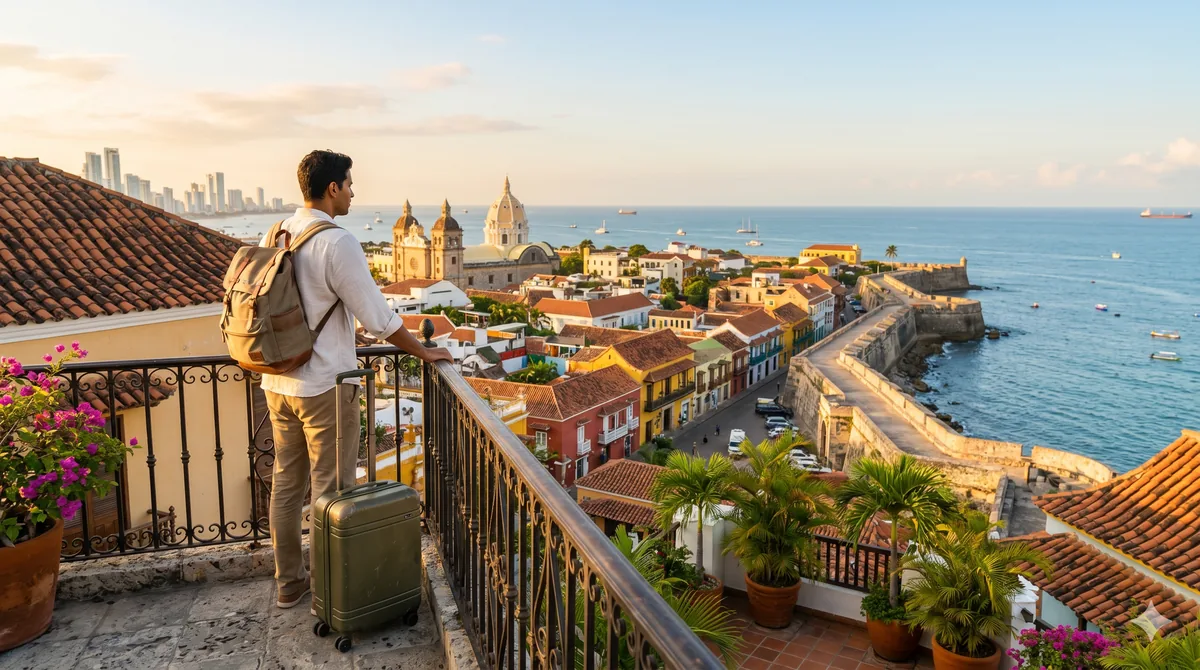
Last updated: May 2026. The first week sets the tone for the rest of your stay. Do the right handful of things in the right order and the next three months are easy. Get them wrong and you will be fighting the heat, the cash machines, and the taxi fares before you have had a single cold lemonade in the shade of the wall. This is a practical, priority-ordered arrival checklist for Cartagena, whether you are here for a week, a month, or to stay. Cartagena rewards arriving slow.
Arriving at Rafael Nuñez airport (CTG) and getting to your neighborhood
Cartagena's Rafael Nuñez International Airport (CTG) sits in the Crespo neighborhood, unusually close to the city, only about 10 to 15 minutes from the Walled City when traffic is light. That short distance is exactly why the airport taxi situation traps people: a 12-minute ride should not cost what some drivers will quote a fresh arrival hauling luggage.
Use the official taxi stand, and agree the fare before the car moves. Cartagena taxis do not run meters, so the price is whatever you settle on. There is an authorized airport-taxi desk in the arrivals hall that hands you a fare slip with a fixed rate by zone. Take the slip. A ride to Bocagrande, Centro, or Getsemaní typically runs around COP 18,000 to 30,000 (about USD 5 to 8 at 4,000 COP to the dollar). To Manga, similar. Confirm the number out loud before you load the trunk.
Say this before getting into a taxi
"¿Cuánto me cobra hasta [barrio / dirección]? Necesito el precio antes de subir, por favor."
How much do you charge to [neighborhood / address]? I need the price before I get in, please.
Rideshare apps are the cleaner option. Uber, DiDi, and inDrive all operate in Cartagena and show you the price up front, no negotiating. The catch is that pickup at the airport can be slightly awkward (drivers sometimes ask you to walk out past the official rank), but the transparent fare is worth it. Have the app installed and your destination pinned before you land.
Do not change money at the airport counter. The rate is poor. Withdraw pesos from an ATM instead (more on that below), or use the small amount of cash you arrived with for the taxi and sort the rest in town.
Have your exact address written down. Tell the driver the neighborhood first (Bocagrande, Getsemaní, Centro, Manga), then the street. Drivers orient by barrio before street number.
If you land late
CTG handles plenty of evening arrivals and the airport-taxi desk runs late, so a night landing is not a problem. Still, a rideshare with a tracked route and a known price beats flagging an unfamiliar car after dark. Arrive, breathe, get a cold water, then sort transport calmly.
Get a SIM card and mobile data
Being reachable and online is the single most useful thing you can fix on day one. Without data you cannot call a rideshare, message a host, or pull up a map, and Cartagena's heat makes standing on a corner hunting for Wi-Fi genuinely unpleasant.
Carrier kiosks are right past baggage claim. Claro, Tigo, and Movistar all sell prepaid SIMs at the airport. Claro generally has the strongest coverage on the Coast. A prepaid plan with 15 to 25 GB of data runs roughly COP 25,000 to 45,000 (about USD 6 to 11). Bring your passport, activation takes 10 to 15 minutes.
Say this at the SIM kiosk
"Quiero una SIM prepago con datos. Tengo pasaporte. ¿Cuál plan tiene más datos y buena señal aquí en Cartagena?"
I want a prepaid SIM with data. I have my passport. Which plan has the most data and good signal here in Cartagena?
An eSIM is the plug-and-play alternative. Set one up before you fly (Airalo, Holafly, Nomad) and you walk out connected. It costs more than a local prepaid SIM but skips the kiosk entirely. Many travelers run an eSIM for the first day or two, then switch to a cheaper local Claro SIM once settled.
Top-ups are everywhere. Once you have a local number, you recharge (a recarga) at any corner shop, drugstore, or via the carrier app. You do not need to return to a store.
For carrier comparison, current data-pack prices, and exactly how activation works, see our SIM cards and mobile data guide.
Cash, cards, ATMs, and setting up Nequi
Cartagena runs on a mix of cash and cards, and the tourist core takes cards more readily than most Colombian cities. Still, you want pesos in your pocket from day one: taxis, corner shops, beach vendors, and small tiendas are cash-first.
Withdraw from ATMs inside malls or bank branches, not freestanding street machines. Stick to ATMs in places like a shopping center, a supermarket, or inside a bank during business hours. They are safer, less likely to be tampered with, and you are not counting cash on an open sidewalk. Good first withdrawal: COP 400,000 to 800,000 (about USD 100 to 200).
Always choose "pesos," never the home-currency conversion. When the ATM offers to charge you in your own currency (dynamic currency conversion), decline it and pick COP. The home-currency option bakes in a bad exchange rate.
Tell your home bank you are traveling. Many North American and European banks still flag Colombian transactions and freeze cards on the first withdrawal. A two-minute call before you fly prevents a day-one headache.
Set up Nequi. Nequi is Colombia's dominant phone-to-phone payment app, and you will be asked for it constantly, splitting a bill, paying a small vendor, settling up with someone you just met. Download Nequi, register with your local cell number plus your passport or cédula de extranjería, and you are running in about 10 minutes. It is free.
Say this when someone asks for your Nequi
"Sí, tengo Nequi. Mi número es [número]. ¿Me puede confirmar a nombre de quién está registrado el suyo antes de transferir?"
Yes, I have Nequi. My number is [number]. Can you confirm the name the account is registered under before I transfer?
Keep small bills. Vendors and taxis rarely have change for a 50,000 note. Break large bills at supermarkets and hang on to 10,000 and 20,000 notes.
For how to open a real Colombian account, card-vs-cash details, and ATM fee specifics, see our banking and money guide.
Transport orientation: getting around in week one
Cartagena is more walkable than most Colombian cities in its tourist core, but the heat changes the math. Here is how to move:
Walk the Walled City and Getsemaní. The Centro Histórico and neighboring Getsemaní are compact, flat, and best on foot. This is the part of Cartagena you came for. Walk early morning or after about 4 pm to dodge the worst sun. Midday, stay in the shade or indoors.
Taxis have no meters, so agree the fare first. Every single time, before you get in. Within the city, most short rides are COP 10,000 to 25,000 (about USD 2.50 to 6). If a quote feels high, it probably is. Knowing the rough rate to your neighborhood (ask your host or your portero) keeps you from overpaying. If the driver hesitates or tries to get you in the car first, step back and try the next taxi or open a rideshare app.
Say this when hailing a taxi in the city
"¿Cuánto me cobra hasta [barrio]? Si es [monto], listo. Si no, gracias."
How much to [neighborhood]? If it is [amount], let's go. If not, thank you.
Rideshare apps fix the fare problem. Uber, DiDi, and inDrive show the price before you book, no haggling, with a tracked route. For longer hops (Bocagrande to Manga, Centro to the airport) they are usually the easiest and most transparent choice.
Transcaribe is the mass-transit backbone. Cartagena's articulated-bus rapid-transit system runs along the main corridors and is cheap (a single fare is a few thousand pesos, paid with a rechargeable card). It is useful for longer north-south trips once you know the routes, less so for the tourist core, which you will mostly walk.
Confirm the car before you climb in. Whether taxi or rideshare, glance at the plate and the driver against the app. Basic habit, takes two seconds.
Groceries, pharmacy, and water
Settle the basics around your block in the first couple of days and the rest of the week gets easy.
Do not drink the tap water in week one. Cartagena tap water is treated, and many long-term residents drink it, but as a new arrival your stomach has not adjusted. Play it safe: buy bottled, or use a filter. A large jug (a botellón or 6-liter) from the corner shop is only a few thousand pesos. If you are staying a while, ask your building whether it has filtered water (agua pura), many do.
Supermarkets cover everything. The main chains stock groceries, toiletries, and household basics. Budget roughly COP 150,000 to 250,000 (about USD 38 to 63) for a first week of staples. Corner tiendas handle the in-between top-ups: water, snacks, a cold drink.
Pharmacies (droguerías) are plentiful and helpful. They sell sunscreen, electrolyte sachets (suero oral), basic medicines, and many over-the-counter items that need a prescription back home. Pharmacists give practical advice for minor issues. Pick up SPF 50 and rehydration salts on your first visit, you will use both.
Beating the heat in week one
This is the thing first-time visitors most underestimate. Cartagena is hot and humid year-round, sitting just 10 degrees north of the equator at sea level. The heat is not a backdrop, it sets the daily schedule.
Schedule errands for morning and evening. Locals run around in the cooler hours: out early (roughly 7 to 10 am), indoors or slow through the worst midday heat, out again from late afternoon. Fight this rhythm in week one and you will burn out by Wednesday.
Hydrate constantly. Carry water everywhere and drink more than you think you need. Add an electrolyte sachet on heavy days. The humidity means you sweat without noticing.
Sun protection is non-negotiable. SPF 50, a hat, and sunglasses. The midday sun is genuinely strong, even on overcast days.
Confirm A/C before you book or settle in. If you are choosing accommodation, air conditioning (aire acondicionado) in the bedroom is the difference between sleeping and not. Many older or budget places have only fans. Check before you commit.
Dress for it. Light, breathable, loose. Linen and cotton. You will change clothes more often than you expect, plan laundry accordingly.
Orienting to your neighborhood
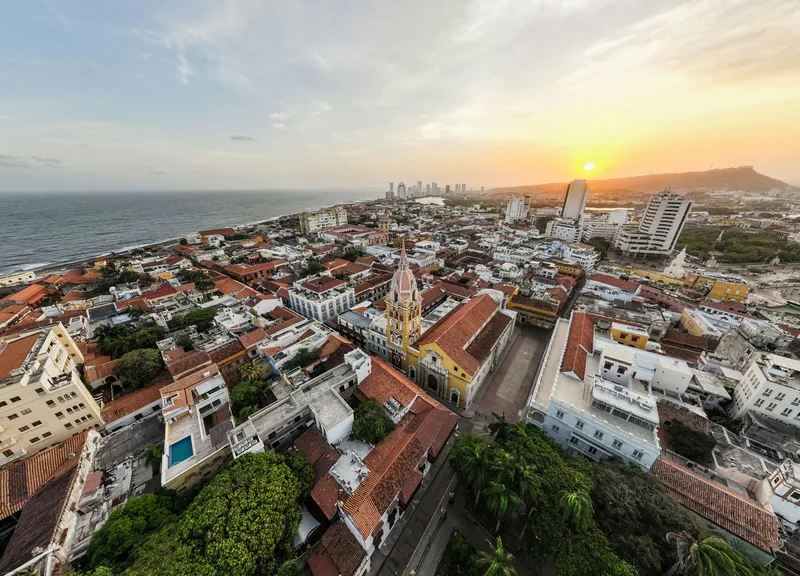
Cartagena's character changes sharply from one barrio to the next. Knowing where you are anchors everything else. The expat-relevant areas in brief:
Centro (Ciudad Amurallada): the Walled City itself. Postcard colonial Cartagena, balconies and bougainvillea, restaurants, boutiques. Mostly short-term rentals and tourism. Beautiful to stay in, lively, and pricier.
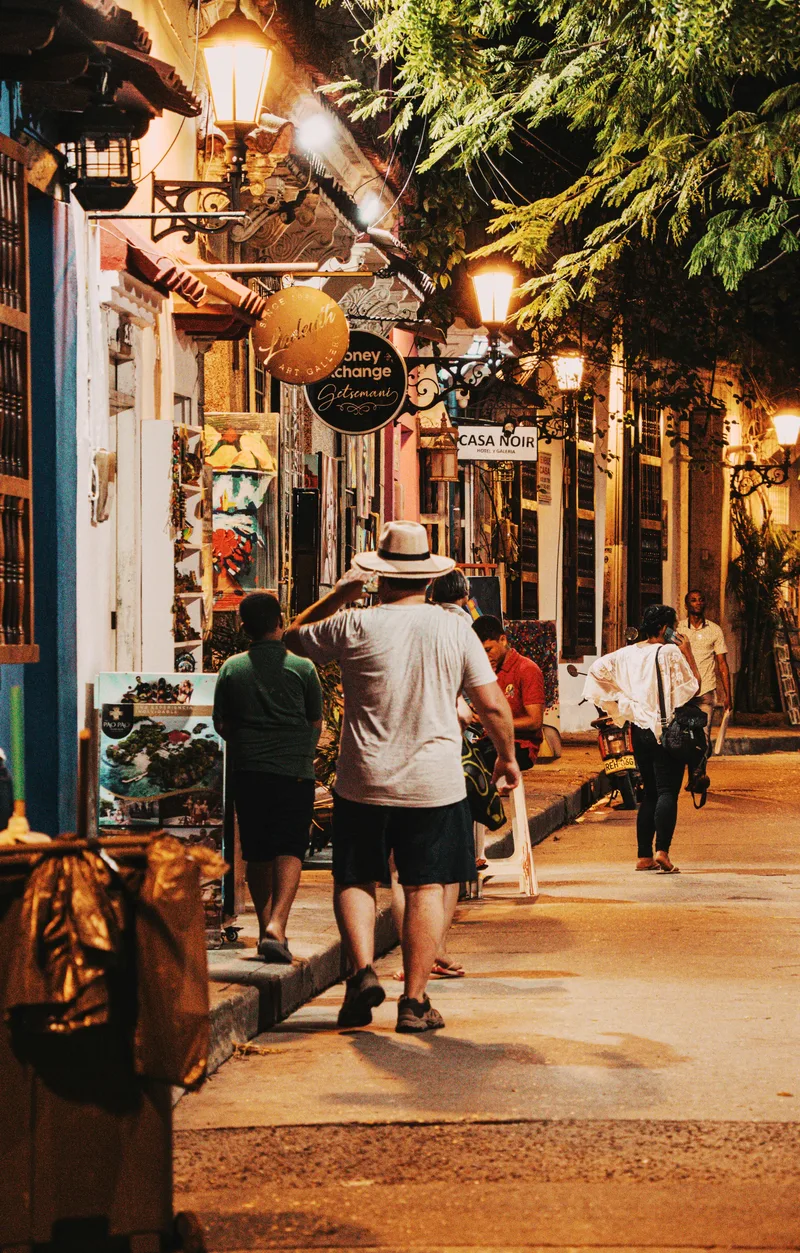
Getsemaní: just outside the walls, the old working-class quarter turned creative and nightlife hub. Street art, plazas that fill in the evening, hostels and small hotels. Walkable, social, energetic.
Bocagrande: the high-rise beach peninsula. Towers, condos, beachfront, supermarkets, a more modern-city feel. Convenient and full of services, less historic charm.
Manga: a quieter residential island just south of Centro, with large old homes and newer mid-rises. More local, calmer, popular with people staying longer.
On day one or two, walk your immediate block and locate the nearest corner shop (tienda), bakery (panadería), fruit seller, and pharmacy. If your building has a doorman (portero), introduce yourself, they are the single most useful person on any block. For a fuller read on who lives where and how each area feels, see our neighborhoods guide, and if you are renting, our housing and renting guide.
Safety habits for your first week
Cartagena's tourist core is well-policed and walkable, and most visits are completely uneventful. The smart move is to build a few habits early so you are not learning them the hard way.
"No dar papaya." This Colombian phrase translates loosely as "do not give an opportunity." Do not flash an expensive phone or wad of cash, do not leave a bag unattended on the beach, do not wander unfamiliar areas alone late at night. Remove the temptation and most problems never start.
Know the common scams. Two stand out for arrivals. Beach vendors in tourist zones can be persistent, the massage, bracelet, or fruit offered "as a gift" that turns into a demand for payment, agree a price and confirm it is the total before accepting anything, or simply say "no, gracias" firmly and keep walking. Taxi overcharging, covered above, agree the fare first, or use a rideshare app.
Keep your phone out of sight on the street, especially at night and in unfamiliar areas. If you need to navigate, step into a shop or restaurant to check the map.
The emergency number is 123. It connects you to police, medical, and fire across Colombia. Save it now. For anything serious, call 123.
Use rideshare or a known taxi after dark rather than flagging a random car, and share your trip with someone if you are out late.
For neighborhood-by-neighborhood detail and an honest read on which areas to be careful in, see our safety guide.
Starting Spanish
The tourist core of Cartagena has more English than the rest of Colombia, but lean on that and you will stay a tourist. Even a small amount of Spanish changes how the city treats you.
Twenty minutes a day is the difference between surviving and connecting. Learn greetings, numbers, "how much is it" (cuánto cuesta), and the food words you will use daily. Vendors, drivers, and neighbors warm up fast when you try.
Download Google Translate with Spanish offline before you land. The camera-translate feature is handy for menus and signs.
Learn the costeño rhythm. Caribbean-coast Spanish is fast and clips the ends of words. Do not be discouraged if textbook Spanish does not match what you hear, ask people to repeat "más despacio, por favor" and they will slow down.
Healthcare basics
You almost certainly will not need a doctor in your first week, but knowing the lay of the land removes a worry.
Pharmacies handle the small stuff. For minor ailments, an upset stomach, a sunburn, a cut, the droguería on your block is the first stop and the pharmacist will advise you.
Carry proof of travel insurance. If you are on a tourist stay, keep your insurance card in your wallet and a screenshot on your phone. Private clinics in Cartagena are good, but you want coverage before you need it.
For an emergency, call 123. It dispatches medical services along with police and fire.
For how the Colombian system works, EPS enrollment if you are staying long term, and which clinics serve expats, see our healthcare guide.
Meeting people
Week one is the right time to plant a social seed, even if you are exhausted. The people you meet early shape the rest of your stay.
Show up to one thing. A language exchange, an expat meetup, a dance class, anything with other humans and a repeating time slot. Getsemaní's evening plazas are a low-pressure place to be around people.
Be a regular somewhere. Pick one café or one corner restaurant and go back. Familiar faces turn into conversations turn into a circle faster than you would think.
Mix expats and locals. Expat groups help you settle quickly, but the locals are why you came. Both matter.
If you do nothing else, do these, roughly in this order:
Get from the airport without overpaying: official taxi stand with a fixed fare slip, or a rideshare app. Agree the price first.
Get connected: a local SIM (Claro) or an eSIM, so you can call rides, message hosts, and pull up maps.
Get pesos safely: withdraw from an ATM inside a mall or bank, choose "pesos" not home currency, keep small bills.
Set up Nequi: 10 minutes, free, and you will be asked for it constantly.
Buy water, sunscreen, and electrolytes: do not drink tap water in week one, and respect the sun.
Learn the heat schedule: errands morning and evening, slow through midday, confirm A/C where you sleep.
Orient to your neighborhood: find the nearest tienda, bakery, fruit seller, and pharmacy, and meet the portero.
Build safety habits: no dar papaya, agree taxi fares, phone out of sight at night, save 123.
Start Spanish: 20 minutes a day, offline Translate installed.
Plant one social seed: show up to one meetup, class, or exchange.
One mindset note
Cartagena is two cities at once: the polished, photogenic Walled City and the hot, loud, real Caribbean port wrapped around it. Both are the point. Your first week will feel like a lot, the heat, the vendors, the fare-haggling, the unfamiliar rhythm. Give it a few days. By the second week you stop fighting the city and start moving with it, slow in the heat, alive in the evening, and far easier than it looked on day one.
Practical advice, not official guidance. Prices are indicative and shift; verify current fares and rates locally. For emergencies in Colombia, call 123. Last review: May 2026.
Still have questions?¿Todavía tienes preguntas?
Catalina is our concierge. Ask her about visas, neighborhoods, healthcare, prices, anything Cartagena. She answers in chat or WhatsApp, English or Spanish, free.Catalina es nuestra concierge. Pregúntale sobre visas, barrios, salud, precios, cualquier cosa de Cartagena. Responde por chat o WhatsApp, en inglés o español, gratis.
Specific question while you read? Ask Catalina, the Cartagena Guide concierge.¿Pregunta específica mientras lees? Pregúntale a Catalina, la concierge de Cartagena Guide.Chat with Catalina ›Habla con Catalina ›
Última actualización: mayo de 2026. La primera semana marca el ritmo del resto de tu estadía. Si haces lo correcto en el orden correcto, los próximos tres meses son fáciles. Si te equivocas estarás peleando contra el calor, los cajeros automáticos y las tarifas de taxi antes de haber tomado un solo limonada fría a la sombra de la muralla. Esta es una lista de verificación práctica y ordenada por prioridades para llegar a Cartagena, ya sea que estés una semana, un mes o para quedarte. Cartagena recompensa a quien llega lentamente.
Llegar al aeropuerto Rafael Nuñez (CTG) y desplazarte a tu barrio
El Aeropuerto Internacional Rafael Nuñez (CTG) de Cartagena queda en el barrio Crespo, inusualmente cerca de la ciudad, apenas unos 10 a 15 minutos de la Ciudad Amurallada cuando el tráfico está ligero. Esa corta distancia es exactamente por qué la situación de taxis del aeropuerto atrapa a la gente: un viaje de 12 minutos no debería costar lo que algunos conductores le cobran a una persona que llega con maletas.
Usa la estación oficial de taxis y acuerda la tarifa antes de que el carro se mueva. Los taxis de Cartagena no tienen taxímetro, así que el precio es lo que negocias. Hay un escritorio autorizado de taxis del aeropuerto en la sala de llegadas que te da un comprobante con una tarifa fija por zona. Toma el comprobante. Un viaje a Bocagrande, Centro o Getsemaní típicamente cuesta alrededor de COP 18.000 a 30.000 (unos USD 5 a 8 a 4.000 COP por dólar). A Manga, similar. Confirma el número en voz alta antes de cargar el baúl.
Di esto antes de subirse a un taxi
¿Cuánto me cobra hasta [barrio / dirección]? Necesito el precio antes de subir, por favor.
How much do you charge to [neighborhood / address]? I need the price before I get in, please.
Las apps de transporte compartido son la opción más limpia. Uber, DiDi e inDrive operan en Cartagena y te muestran el precio por adelantado, sin negociar. La complicación es que la recogida en el aeropuerto puede ser un poco incómoda (a veces los conductores te piden que camines pasando el puesto oficial), pero la tarifa transparente vale la pena. Instala la app y fija tu destino antes de aterrizar.
No cambies dinero en el mostrador del aeropuerto. La tasa es mala. Retira pesos de un cajero automático (más sobre eso abajo), o usa el poco dinero en efectivo que llegaste para el taxi y arregla el resto en la ciudad.
Ten tu dirección exacta anotada. Dile al conductor el barrio primero (Bocagrande, Getsemaní, Centro, Manga), luego la calle. Los conductores se orientan por barrio antes que por número de calle.
Si aterrizas tarde
CTG atiende muchas llegadas nocturnas y el escritorio de taxis del aeropuerto funciona tarde, así que un aterrizaje nocturno no es problema. Aún así, un viaje compartido con una ruta rastreada y un precio conocido es mejor que parar un carro desconocido después de oscuro. Llega, respira, toma agua fría, luego arregla el transporte con calma.
Consigue una tarjeta SIM y datos móviles
Ser alcanzable y estar conectado es lo más útil que puedes arreglar el primer día. Sin datos no puedes llamar a un transporte compartido, mensajear a un anfitrión, o sacar un mapa, y el calor de Cartagena hace genuinamente desagradable estar parado en una esquina buscando Wi-Fi.
Los quioscos de las operadoras están justo pasada la reclamación de equipaje. Claro, Tigo y Movistar todos venden SIM prepagos en el aeropuerto. Claro generalmente tiene la cobertura más fuerte en la Costa. Un plan prepago con 15 a 25 GB de datos cuesta aproximadamente COP 25.000 a 45.000 (unos USD 6 a 11). Trae tu pasaporte, la activación toma 10 a 15 minutos.
Di esto en el quiosco de SIM
Quiero una SIM prepago con datos. Tengo pasaporte. ¿Cuál plan tiene más datos y buena señal aquí en Cartagena?
I want a prepaid SIM with data. I have my passport. Which plan has the most data and good signal here in Cartagena?
Un eSIM es la alternativa listo para usar. Configúralo antes de volar (Airalo, Holafly, Nomad) y sales conectado. Cuesta más que una SIM prepaga local pero salta el quiosco completamente. Muchos viajeros usan un eSIM los primeros uno o dos días, luego cambian a una SIM Claro local más barata una vez asentados.
Las recargas están en todas partes. Una vez tengas un número local, recargas (una recarga) en cualquier tienda de esquina, farmacia, o a través de la app de la operadora. No necesitas regresar a una tienda.
Para comparación de operadoras, precios de paquetes de datos actuales y exactamente cómo funciona la activación, mira nuestra guía de tarjetas SIM y datos móviles.
Efectivo, tarjetas, cajeros automáticos y configurar Nequi
Cartagena funciona con una mezcla de efectivo y tarjetas, y la zona turística acepta tarjetas más fácilmente que la mayoría de ciudades colombianas. Aun así, quieres pesos en tu bolsillo desde el primer día: taxis, tiendas de esquina, vendedores de playa, y pequeñas tiendas son principalmente de efectivo.
Retira de cajeros automáticos dentro de centros comerciales o sucursales bancarias, no de máquinas independientes en la calle. Mantente en cajeros en lugares como un centro comercial, un supermercado, o dentro de un banco durante horario comercial. Son más seguros, menos probable que hayan sido manipulados, y no estás contando efectivo en una acera abierta. Buen primer retiro: COP 400.000 a 800.000 (unos USD 100 a 200).
Siempre elige "pesos", nunca la conversión a tu moneda de origen. Cuando el cajero te ofrece cobrarte en tu propia moneda (conversión dinámica de moneda), recházalo y escoge COP. La opción de moneda de origen introduce una tasa de cambio mala.
Avísale a tu banco en casa que estás viajando. Muchos bancos de América del Norte y Europa aún marcan transacciones colombianas e inmovilizan tarjetas en el primer retiro. Una llamada de dos minutos antes de volar previene una complicación del primer día.
Configura Nequi. Nequi es la app dominante de pago de teléfono a teléfono en Colombia, y te la van a pedir constantemente, dividiendo una cuenta, pagándole a un vendedor pequeño, arreglando con alguien que acabas de conocer. Descarga Nequi, regístrate con tu número de celular local más tu pasaporte o cédula de extranjería, y estás funcionando en unos 10 minutos. Es gratis.
Di esto cuando alguien te pide tu Nequi
Sí, tengo Nequi. Mi número es [número]. ¿Me puede confirmar a nombre de quién está registrado el suyo antes de transferir?
Yes, I have Nequi. My number is [number]. Can you confirm the name the account is registered under before I transfer?
Mantén billetes pequeños. Los vendedores y taxis raramente tienen cambio para un billete de 50.000. Cambia billetes grandes en supermercados y guarda billetes de 10.000 y 20.000.
Para cómo abrir una cuenta colombiana real, detalles de tarjeta vs efectivo y especificidades de comisiones de cajeros, mira nuestra guía completa de banca y dinero.
Orientación de transporte: moverte en la primera semana
Cartagena es más caminable que la mayoría de ciudades colombianas en su zona turística, pero el calor cambia el juego. Así es cómo moverse:
Camina la Ciudad Amurallada y Getsemaní. El Centro Histórico y el vecino Getsemaní son compactos, planos, y mejores a pie. Esta es la parte de Cartagena por la que viniste. Camina temprano en la mañana o después de las 4 pm para esquivar el peor sol. A mediodía, quédate en la sombra o adentro.
Los taxis no tienen taxímetro, así que acuerda la tarifa primero. Cada vez, antes de subir. Dentro de la ciudad, la mayoría de viajes cortos son COP 10.000 a 25.000 (unos USD 2.50 a 6). Si una cotización parece alta, probablemente lo es. Saber la tarifa aproximada a tu barrio (pregúntale a tu anfitrión o tu portero) te mantiene de no pagarse de más. Si el conductor duda o intenta meterte al carro primero, retrocede e intenta el siguiente taxi o abre una app de transporte compartido.
Di esto cuando pares un taxi en la ciudad
¿Cuánto me cobra hasta [barrio]? Si es [monto], listo. Si no, gracias.
How much to [neighborhood]? If it is [amount], let's go. If not, thank you.
Las apps de transporte compartido arreglan el problema de la tarifa. Uber, DiDi e inDrive muestran el precio antes de reservar, sin negociar, con una ruta rastreada. Para saltos más largos (Bocagrande a Manga, Centro al aeropuerto) típicamente son la opción más fácil y transparente.
Transcaribe es la columna vertebral del transporte masivo. El sistema de rápido tránsito de autobuses articulados de Cartagena funciona a lo largo de los principales corredores y es barato (una tarifa individual cuesta unos pocos miles de pesos, pagada con una tarjeta recargable). Es útil para viajes norte-sur más largos una vez conoces las rutas, menos útil para la zona turística, que mayormente caminarás.
Confirma el carro antes de subir. Ya sea taxi o transporte compartido, mira la placa y el conductor comparados a la app. Hábito básico, toma dos segundos.
Comestibles, farmacia y agua
Arregla lo básico alrededor de tu bloque en los primeros días y el resto de la semana se pone fácil.
No bebas agua de la llave en la primera semana. El agua de la llave de Cartagena es tratada, y muchos residentes de largo plazo la beben, pero como una llegada nueva tu estómago no se ha ajustado. Juega seguro: compra embotellada, o usa un filtro. Un garrafón grande (un botellón o de 6 litros) de la tienda de esquina cuesta solo unos pocos miles de pesos. Si te vas a quedar un tiempo, pregunta si tu edificio tiene agua filtrada (agua pura), muchos la tienen.
Los supermercados lo cubren todo. Las principales cadenas surten comestibles, artículos de tocador y básicos para el hogar. Presupuesta aproximadamente COP 150.000 a 250.000 (unos USD 38 a 63) para una primera semana de esenciales. Las tiendas de esquina manejan los reabastecimiento intermedios: agua, snacks, una bebida fría.
Las farmacias (droguerías) son abundantes y útiles. Venden protector solar, sobres de suero oral, medicinas básicas, y muchos artículos de venta libre que necesitan receta en casa. Los farmacéuticos dan consejo práctico para problemas menores. Compra SPF 50 y sales de rehidratación en tu primera visita, usarás ambas.
Vencer el calor en la primera semana
Esto es lo que los visitantes por primera vez más subestiman. Cartagena es caliente y húmeda todo el año, ubicada a solo 10 grados norte del ecuador a nivel del mar. El calor no es un telón de fondo, establece el horario diario.
Programa los mandados para la mañana y la tarde. Los locales se mueven en las horas más frescas: temprano (aproximadamente 7 a 10 am), adentro o lentamente a través del peor calor del mediodía, de nuevo por la tarde. Pelea este ritmo en la primera semana y estarás quemado para el miércoles.
Hidratarte constantemente. Carga agua a todas partes y bebe más de lo que crees que necesitas. Añade un sobre de electrolitos en días pesados. La humedad significa que sudas sin notarlo.
La protección solar es innegociable. SPF 50, un sombrero y gafas de sol. El sol del mediodía es genuinamente fuerte, aun en días nublados.
Confirma aire acondicionado antes de reservar o asentarte. Si estás eligiendo alojamiento, aire acondicionado (aire acondicionado) en la alcoba es la diferencia entre dormir y no. Muchos lugares antiguos o económicos solo tienen ventiladores. Verifica antes de comprometerte.
Vístete para ello. Ligero, transpirable, holgado. Lino y algodón. Cambiarás de ropa más a menudo de lo que esperas, planifica la lavandería en consecuencia.
Orientándose a tu barrio
El carácter de Cartagena cambia abruptamente de un barrio a otro. Saber dónde estás ancla todo lo demás. Las áreas relevantes para expatriados en breve:
Centro (Ciudad Amurallada): la propia Ciudad Amurallada. Cartagena colonial de postal, balcones y buganvillas, restaurantes, boutiques. Mayormente rentals de corto plazo y turismo. Hermoso para quedarse, animado, y más caro.
Getsemaní: justo afuera de las murallas, el antiguo barrio obrero convertido en hub creativo y de vida nocturna. Arte callejero, plazas que se llenan en la tarde, hostales y pequeños hoteles. Caminable, social, energético.
Bocagrande: la península de playa de rascacielos. Torres, condominios, frente al mar, supermercados, una sensación más moderna. Conveniente y lleno de servicios, menos encanto histórico.
Manga: una isla residencial más tranquila justo al sur de Centro, con grandes casas antiguas y nuevos edificios de medio-alta. Más local, más tranquilo, popular con gente que se queda más tiempo.
El primer o segundo día, camina tu bloque inmediato y localiza la tienda de esquina más cercana (tienda), panadería (panadería), vendedor de frutas, y farmacia. Si tu edificio tiene un portero (portero), preséntate, son la persona más útil en cualquier bloque. Para una lectura más completa sobre quién vive dónde y cómo se siente cada área, mira nuestra guía de barrios, y si estás alquilando, nuestra guía de vivienda y alquiler.
Hábitos de seguridad para tu primera semana
La zona turística de Cartagena está bien patrullada y es caminable, y la mayoría de visitas son completamente sin eventos. El movimiento inteligente es construir unos pocos hábitos temprano así no los estás aprendiendo de la manera difícil.
No dar papaya. Esta frase colombiana se traduce vagamente como "no des una oportunidad". No muestres un teléfono caro o un fajo de efectivo, no dejes una bolsa desatendida en la playa, no andes en áreas desconocidas solo a última hora de la noche. Quita la tentación y la mayoría de problemas nunca comienzan.
Conoce las estafas comunes. Dos destacan para llegadas. Vendedores de playa en zonas turísticas pueden ser persistentes, el masaje, pulsera o fruta ofrecida "como regalo" que se convierte en una exigencia de pago, acuerda un precio y confirma que es el total antes de aceptar nada, o simplemente di "no, gracias" firmemente y sigue caminando. Sobrecarga de taxis, cubierto arriba, acuerda la tarifa primero, o usa una app de transporte compartido.
Mantén tu teléfono fuera de la vista en la calle, especialmente de noche y en áreas desconocidas. Si necesitas navegar, entra en una tienda o restaurante para revisar el mapa.
El número de emergencia es 123. Te conecta con policía, médicos, y bomberos en toda Colombia. Guárdalo ahora. Para algo serio, llama al 123.
Usa transporte compartido o un taxi conocido después de oscuro en lugar de parar un carro aleatorio, y comparte tu viaje con alguien si estás fuera tarde.
Para detalles barrio por barrio y una lectura honesta sobre qué áreas hay que cuidar, mira nuestra guía de seguridad.
Empezando español
La zona turística de Cartagena tiene más inglés que el resto de Colombia, pero depender de eso y seguirás siendo un turista. Incluso una pequeña cantidad de español cambia cómo la ciudad te trata.
Veinte minutos al día es la diferencia entre sobrevivir y conectar. Aprende saludos, números, "cuánto cuesta", y las palabras de comida que usarás diariamente. Los vendedores, conductores y vecinos se animan rápido cuando lo intentas.
Descarga Google Translate con español sin conexión antes de aterrizar. La función de traducción de cámara es práctica para menús y señales.
Aprende el ritmo costeño. El español de la costa Caribe es rápido y corta los finales de las palabras. No te desanimes si el español de libro de texto no coincide con lo que escuchas, pídele a la gente que repita "más despacio, por favor" y te ralentizarán.
Conceptos básicos de salud
Casi seguramente no necesitarás un doctor en tu primera semana, pero saber el terreno quita una preocupación.
Las farmacias manejan lo pequeño. Para dolencias menores, un estómago alterado, una quemadura solar, un corte, la droguería de tu bloque es la primera parada y el farmacéutico te aconsejará.
Carga prueba de seguro de viaje. Si estás en una estadía de turista, mantén tu tarjeta de seguro en tu billetera y una captura de pantalla en tu teléfono. Las clínicas privadas en Cartagena son buenas, pero quieres cobertura antes de que la necesites.
Para una emergencia, llama al 123. Envía servicios médicos junto con policía y bomberos.
Para cómo funciona el sistema colombiano, inscripción en EPS si te quedas a largo plazo, y qué clínicas atienden a expatriados, mira nuestra guía de salud.
Conociendo gente
La primera semana es el momento correcto para sembrar una semilla social, incluso si estás agotado. La gente que conoces temprano forma el resto de tu estadía.
Aparécete en una cosa. Un intercambio de idioma, un encuentro de expatriados, una clase de baile, cualquier cosa con otros humanos y una hora de repetición. Las plazas de la tarde de Getsemaní son un lugar de baja presión para estar alrededor de gente.
Sé un cliente habitual en algún lugar. Elige un café o un restaurante de esquina y regresa. Las caras familiares se convierten en conversaciones se convierten en un círculo más rápido de lo que pensarías.
Mezcla expatriados y locales. Los grupos de expatriados te ayudan a asentarte rápidamente, pero los locales son por qué viniste. Ambos importan.
Tu lista de verificación priorizada de la primera semana
Si no haces nada más, haz estos, aproximadamente en este orden:
Sal del aeropuerto sin pagarse de más: escritorio oficial de taxis con un comprobante de tarifa fija, o una app de transporte compartido. Acuerda el precio primero.
Conéctate: una SIM local (Claro) o un eSIM, así puedes llamar viajes, mensajear anfitriones, y sacar mapas.
Consigue pesos seguramente: retira de un cajero automático dentro de un centro comercial o banco, elige "pesos" no moneda de origen, mantén billetes pequeños.
Configura Nequi: 10 minutos, gratis, y te la van a pedir constantemente.
Compra agua, protector solar y electrolitos: no bebas agua de la llave en la primera semana, y respeta el sol.
Aprende el horario de calor: mandados en la mañana y la tarde, lentamente a través del mediodía, confirma aire acondicionado donde duermes.
Oriéntate a tu barrio: encuentra la tienda más cercana, panadería, vendedor de frutas y farmacia, y conoce al portero.
Construye hábitos de seguridad: no dar papaya, acuerda tarifas de taxi, teléfono fuera de la vista de noche, guarda 123.
Empieza español: 20 minutos al día, Translate sin conexión instalado.
Siembra una semilla social: aparécete a un encuentro, clase o intercambio.
Una nota de mentalidad
Cartagena es dos ciudades a la vez: la Ciudad Amurallada pulida y fotogénica y el puerto Caribeño caliente, ruidoso y real envuelto alrededor de ella. Ambas son el punto. Tu primera semana se sentirá como mucho, el calor, los vendedores, el regateo de tarifas, el ritmo desconocido. Dale unos días. Para la segunda semana dejas de pelear la ciudad y comienzas a moverte con ella, lentamente en el calor, vivo en la tarde, y mucho más fácil de lo que se veía el primer día.
Consejo práctico, no orientación oficial. Los precios son indicativos y cambian; verifica tarifas y tasas actuales localmente. Para emergencias en Colombia, llama al 123. Última revisión: mayo de 2026.
Still have questions?¿Todavía tienes preguntas?
Catalina is our concierge. Ask her about visas, neighborhoods, healthcare, prices, anything Cartagena. She answers in chat or WhatsApp, English or Spanish, free.Catalina es nuestra concierge. Pregúntale sobre visas, barrios, salud, precios, cualquier cosa de Cartagena. Responde por chat o WhatsApp, en inglés o español, gratis.