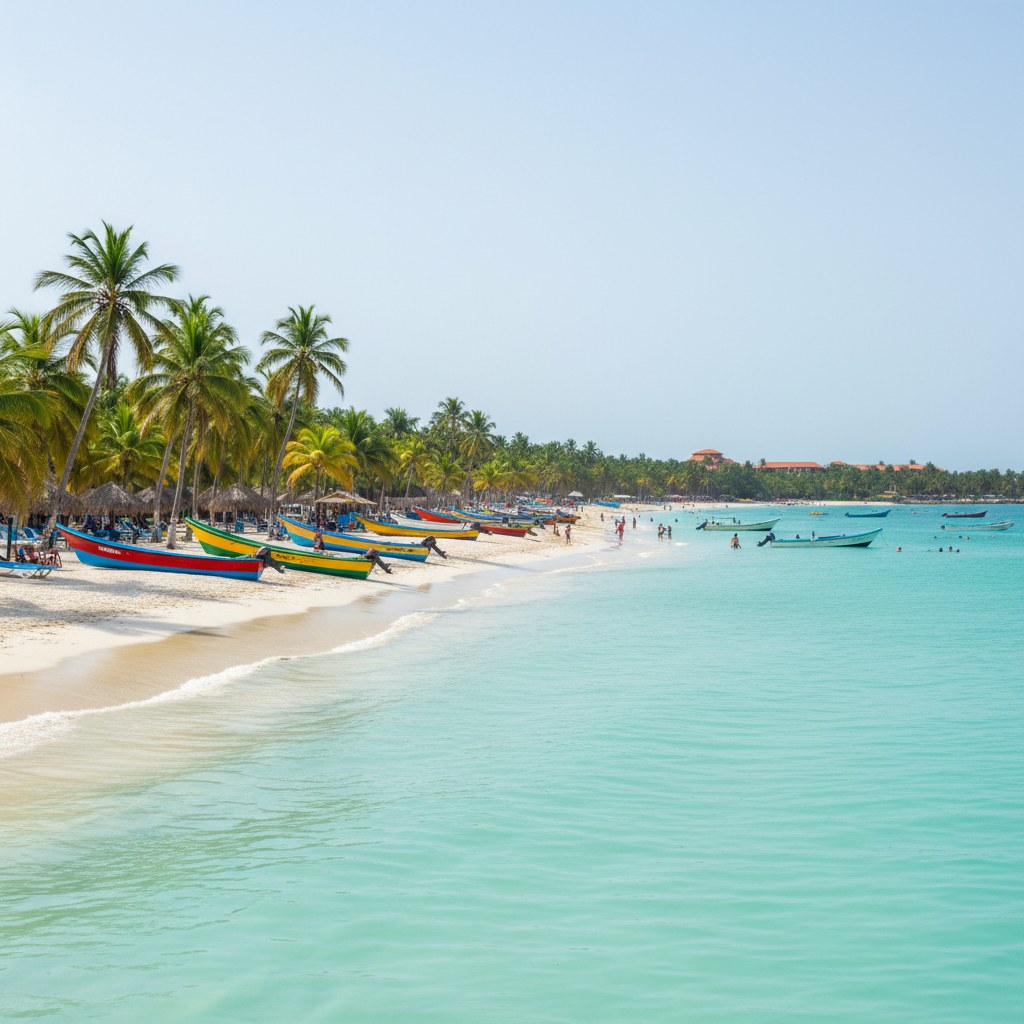
Playa Blanca, Baru: The Postcard Beach, HonestlyPlaya Blanca, Baru: La playa de la postal, de verdad
The white-sand beach on every Cartagena postcard. What it is really like, day trip versus overnight, how to get there, what it costs, and how to enjoy it without the chaos.
Mike Chartrand
May 2026 · 9 min read
Specific question while you read? Ask Catalina, the Cartagena Guide concierge.¿Pregunta específica mientras lees? Pregúntale a Catalina, la concierge de Cartagena Guide.Chat with Catalina ›Habla con Catalina ›
Playa Blanca is the beach on the postcard: a long ribbon of white sand and genuinely turquoise water on Isla Barú, about an hour and a half south of Cartagena. It is the closest the mainland-adjacent coast comes to the Caribbean fantasy, and it is also, by mid-morning, one of the busiest and most aggressively vended beaches in the country. Both things are true. Here is how to get the first without drowning in the second.
The one rule of Playa Blanca
Early or overnight. The beach is close to perfect from sunrise until about 9:30 AM. After that the day boats land and it fills fast. If you can only come midday, lower your expectations or buy into a beach club.
Bring cash in small bills for the Barú landing fee (around COP 15,000), loungers, and food, and to say no cleanly to the rest.
Vendors are relentless: massages, oysters, ceviche, jewelry, braids, drinks. A firm, friendly "no, gracias" repeated without eye contact is the technique. Agree any price out loud before you accept anything.
Reef-safe sunscreen, water, and a hat. Shade is sold, not given.
Say this to vendors
"No, gracias. Si quiero algo, yo le aviso."
"No thanks. If I want something, I will let you know."
What Playa Blanca actually is
Playa Blanca sits on Isla Barú, a spit of land south of Cartagena that became an island when the Spanish-era Canal del Dique was cut, linking the Magdalena River to the bay. Today a road and bridge connect it to the mainland, so you can reach the beach by car as well as by boat. The sand really is white and the water really is clear, far better than the gray-brown city beaches of Bocagrande. That quality is exactly why it gets the crowds.
The honest reality
At its best, dawn at Playa Blanca is the Caribbean you imagined. By late morning it is a working beach economy: hundreds of day-trippers, music from competing speakers, and a vendor every few meters. None of it is dangerous, it is just intense. People who leave disappointed almost always came at noon and expected serenity. People who leave happy came early, or stayed the night, or paid a beach club to manage the chaos for them.
Day trip or overnight
Day trip: the standard option, by road or boat, back in the city by evening. Fine if you arrive early. Overnight: the smart upgrade. Small eco-cabins, hostels, and guesthouses line the beach, and staying over buys you the empty 6:00 to 9:00 AM and 5:00 to 7:00 PM windows when the day crowd is gone and the beach is yours. Accommodation is basic (expect simple rooms, limited power, mosquito nets) but the payoff is real. Beach club day pass: the middle path, a set fee for a lounger, controlled vendor access, food, and sometimes a pool, which makes a midday visit pleasant.
Getting there
Two ways in. By road across the Barú bridge takes roughly one to one and a half hours by car, taxi, or shuttle, and lets you come and go on your own schedule. By boat from Muelle de la Bodeguita takes about 45 minutes to an hour and is often bundled with a Rosario Islands stop. Either way, build in the Barú landing fee, paid in cash.
What it costs
A round-trip day tour runs roughly COP 80,000 to 120,000 per person (USD 20 to 30), usually including the boat and a beach landing, with lunch and loungers extra or bundled depending on the operator. The Barú landing fee (around COP 15,000) is typically separate. Beach club day passes vary widely by how upscale the club is. If you want an easy, English-friendly booking with clear cancellation terms, this full-day Barú and islands trip on Viator covers Playa Blanca and the nearby bay of Cholón in one go.
Some links on this page are affiliate links, which means we may earn a small commission at no extra cost to you. See our affiliate disclosure.
Photo via Viator
A little history of Baru
Barú is not just a beach backdrop. Its communities, including the village of Santa Ana, are largely Afro-Caribbean, descended in part from people who freed themselves from slavery in the colonial era, the same regional story that produced nearby San Basilio de Palenque. The Canal del Dique that made Barú an island was dug to move river trade toward Cartagena, and it reshaped this whole coast. Tourism arrived fast and unevenly, which is part of why the beach feels both beautiful and hard-edged. A little of that context makes the place read as more than a sunbed.
All prices in COP with USD conversions at approximately 4,000:1 - confirm the current rate when you travel. Tour prices, fees, and beach conditions change, so verify before booking. Last review: May 2026.
Specific question while you read? Ask Catalina, the Cartagena Guide concierge.¿Pregunta específica mientras lees? Pregúntale a Catalina, la concierge de Cartagena Guide.Chat with Catalina ›Habla con Catalina ›
Playa Blanca es la playa de la postal: una larga cinta de arena blanca y agua turquesa de verdad en Isla Barú, como una hora y media al sur de Cartagena. Es lo más cerca que la costa adyacente al continente llega a la fantasía caribeña, y también es, pasadas las 9 de la mañana, una de las playas más llenas y más agresivamente vendidas del país. Las dos cosas son ciertas. Aquí está cómo conseguir la primera sin ahogarse en la segunda.
La regla única de Playa Blanca
Temprano o durmiendo ahí. La playa está casi perfecta desde el amanecer hasta las 9:30 AM más o menos. Después llegan los botes de día y se llena rápido. Si solo puedes venir al mediodía, baja tus expectativas o cómprate un paquete de beach club.
Lleva efectivo en billetes pequeños para la tarifa de desembarque en Barú (como COP 15,000), las hamacas y la comida, y para decirle que no claramente al resto.
Los vendedores son implacables: masajes, ostras, ceviche, joyas, trenzas, bebidas. Un "no, gracias" firme y amable repetido sin contacto visual es la técnica. Acuerda cualquier precio en voz alta antes de aceptar algo.
Bloqueador seguro para arrecife, agua y gorra. La sombra se vende, no se regala.
Dile esto a los vendedores
"No, gracias. Si quiero algo, yo le aviso."
"No thanks. If I want something, I will let you know."
Qué es realmente Playa Blanca
Playa Blanca queda en Isla Barú, una lengüeta de tierra al sur de Cartagena que se volvió isla cuando cortaron el Canal del Dique de la era española, conectando el río Magdalena con la bahía. Hoy una carretera y un puente la conectan con el continente, así que puedes llegar a la playa en carro además de en bote. La arena de verdad es blanca y el agua de verdad es clara, mucho mejor que las playas grisáceas-cafés de la ciudad en Bocagrande. Esa misma calidad es exactamente por qué le llueven las multitudes.
La realidad honesta
En su mejor momento, el amanecer en Playa Blanca es el Caribe que imaginaste. Pasadas las 9 de la mañana es una economía de playa trabajando: cientos de excursionistas de un día, música de parlantes en competencia, y un vendedor cada pocos metros. Nada de eso es peligroso, es solo intenso. La gente que se va decepcionada casi siempre llegó al mediodía y esperaba serenidad. La gente que se va contenta llegó temprano, o durmió una noche ahí, o pagó un beach club para que le manejara el caos.
Excursión de un día o noche
Excursión de un día: la opción estándar, por carretera o bote, de vuelta a la ciudad por la noche. Bien si llegas temprano. Noche: el upgrade inteligente. Pequeñas cabañas ecológicas, hostales y casas de huéspedes bordean la playa, y quedarte la noche te compra las ventanas vacías de 6:00 a 9:00 AM y de 5:00 a 7:00 PM cuando la multitud de día se fue y la playa es tuya. La hospedería es básica (espera cuartos simples, electricidad limitada, mosquiteros) pero la recompensa es real. Day pass de beach club: el camino intermedio, una tarifa fija por hamaca, acceso controlado de vendedores, comida, y a veces piscina, lo que hace que una visita al mediodía sea agradable.
Cómo llegar
Dos formas de entrar. Por carretera cruzando el puente de Barú son más o menos una a una hora y media en carro, taxi o shuttle, y te deja venir y ir en tu propio horario. Por bote desde Muelle de la Bodeguita toma como 45 minutos a una hora y a menudo viene empaquetado con una parada en las Islas Rosario. De cualquier forma, cuenta con la tarifa de desembarque en Barú, pagada en efectivo.
Cuánto cuesta
Un tour de un día ida y vuelta corre más o menos COP 80,000 a 120,000 por persona (USD 20 a 30), usualmente incluyendo el bote y desembarque en la playa, con almuerzo y hamacas extra o empaquetados dependiendo del operador. La tarifa de desembarque en Barú (como COP 15,000) típicamente es aparte. Los day passes de beach club varían bastante dependiendo de cuán exclusivo sea el club. Si quieres una reserva fácil, amigable en inglés con términos claros de cancelación, este tour de día completo por Barú e islas en Viator cubre Playa Blanca y la bahía cercana de Cholón en un viaje.
Algunos links en esta página son links de afiliación, lo que significa que podemos ganar una pequeña comisión sin costo extra para ti. Ve nuestro affiliate disclosure.
Foto vía Viator
Un poco de historia de Barú
Barú no es solo un telón de fondo de playa. Sus comunidades, incluyendo el pueblo de Santa Ana, son en gran parte Afro-Caribeñas, descendientes en parte de gente que se liberó a sí misma de la esclavitud en la era colonial, la misma historia regional que produjo el cercano San Basilio de Palenque. El Canal del Dique que convirtió a Barú en isla fue cavado para mover el comercio fluvial hacia Cartagena, y reformó toda esta costa. El turismo llegó rápido y desigualmente, lo que es parte de por qué la playa se siente hermosa y durilla al mismo tiempo. Un poco de ese contexto hace que el lugar se lea como más que una cama de playa.
Todos los precios en COP con conversiones a USD aproximadamente 4,000:1 - confirma la tasa actual cuando viajes. Los precios de tours, tarifas y condiciones de playa cambian, así que verifica antes de reservar. Última revisión: May 2026.
Newsletter
Get the guide in your inbox
One short email each Saturday. New posts, what's on this week, and anything worth knowing about Cartagena. No spam, unsubscribe anytime.